

Correcting Tomato Magnesium Deficiency with MgSO4
Recognising the Deficiency in Time
Tomato magnesium deficiency usually appears first on older leaves, because magnesium is mobile within the plant and is remobilised to support new growth. Growers notice a pale margin and a green central triangle along the vein before any yield effect is visible.
MgSO4 Group Limited recommends checking the crop at the third and fifth truss stages in a winter greenhouse, when demand peaks and root uptake is least reliable. Early correction costs far less than recovering lost fruit quality later.
Interveinal Chlorosis and Its Lookalikes
The classic interveinal chlorosis pattern can be confused with iron deficiency, which shows on young leaves first, or with potassium shortage, which tends to produce marginal scorch rather than a clean green V around the midrib.
Confirm with a leaf tissue test and a root-zone solution check before dosing. High potassium or calcium in the feed can induce magnesium deficiency even when the total magnesium supply is adequate.
MgSO4 for Tomatoes: Grade Selection
Choosing MgSO4 for tomatoes depends on the application route. A fully soluble heptahydrate crystal or fine powder suits a stock tank and drip feed, while a sized granular grade is better for a pre-plant soil incorporation.
Ask for a low insoluble fraction and a stated dissolution behaviour at your stock-tank temperature. Residue in the filter is a daily operating problem, not a minor specification detail.

tomato magnesium deficiency — Magnesium Sulphate Heptahydrate 99% (Epsom Salt) 0.1-1mm crystal powder from MgSO4 Group Limited — view product: https://www.mgso4.com/pid18135906/Magnesium-Sulphate-Heptahydrate-99-Epsom-Salt-0-1-1mm-crystal-powder.htm
Magnesium Sulphate Soil Drench Method
A measured magnesium sulphate soil drench corrects an acute deficiency faster than a dry broadcast application, because the nutrient is already in solution at the root zone. Dissolve the grade completely in a separate stock vessel before adding it to the main tank.
Apply with a uniform irrigation volume and follow with a short clean-water flush to move the solution into the root profile and off the foliage. Avoid mixing a concentrated magnesium stock directly with a concentrated calcium stock.
Greenhouse Magnesium Correction Timing
Greenhouse magnesium correction should be staged rather than delivered as a single large dose. Split the calculated amount across two or three irrigation cycles and re-check leaf colour and solution EC between applications.
Correct in the morning when transpiration is moderate, and avoid heavy dosing during a period of low light. A crop under low radiation cannot use a sudden nutrient surge efficiently.
Magnesium Sulfate Fertilizer in the Programme
Treat magnesium sulfate fertilizer as a standing line in the nutrient recipe once a deficiency has been corrected. Continuous low-level supply is more stable than repeated rescue treatments, and it keeps both magnesium and sulphur available.
Recalculate the sulphate contribution to EC and to the overall anion balance when you add the line. Where a separate sulphur source is already in the formula, reduce it rather than stacking two inputs.
Avoiding Overcorrection and Salt Stress
More MgSO4 is not automatically better. Excess magnesium competes with calcium and potassium uptake, and the accompanying sulphate raises solution salinity at a time when winter crops are already sensitive to EC.
Set a ceiling based on tissue and solution tests, and hold it. If leaf symptoms persist after two cycles, revisit the root environment, pH and irrigation uniformity before increasing the dose.
Verification and Monitoring
Record the date, rate, batch number and observed response for each correction. Re-test leaf tissue seven to ten days later and compare the same leaf position, not a newly expanded leaf.
Keep the lot-specific certificate of analysis from your supplier next to these records. When a programme is audited or a crop problem recurs, that traceability shortens the diagnosis considerably.
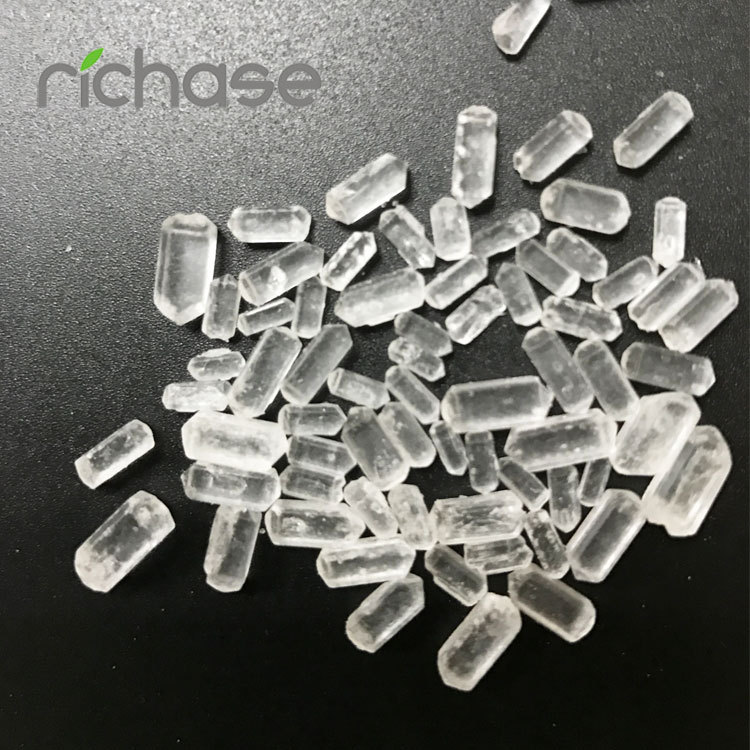
MgSO4 for tomatoes — Magnesium Sulphate Heptahydrate(Epsom Salt) 99.5% 4-7 mm crystal
Working With Your Supplier
MgSO4 Group Limited supplies soluble heptahydrate grades with per-lot COA, stated heavy-metal ceilings suitable for food-crop production and a retained reference sample for each shipment.
Share your crop stage, feed analysis and stock-tank temperature, and our team will recommend a grade and a dosing range matched to your greenhouse programme.
Share your grade, quantity and destination with MgSO4 Group Limited for a specification-matched quotation and documented lead time.